UAE–Africa Gold Corridor: When Scale, Traceability Gaps, and Conflict-Finance Risk Converge
Executive Summary
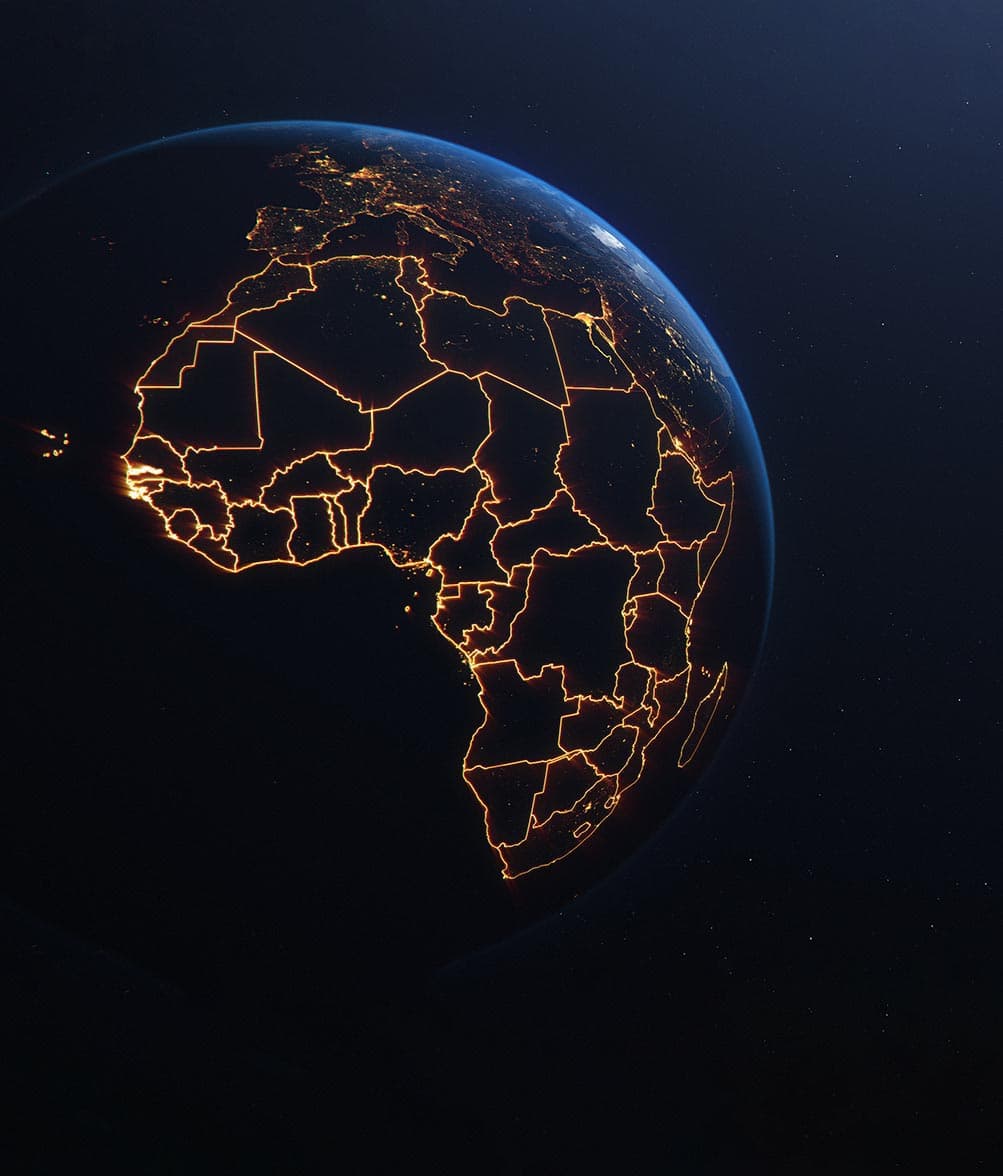
The United Arab Emirates has consolidated its position as one of the world’s dominant gold trading and refining hubs, importing an estimated 1,400 tons of gold worth more than USD 105 billion in 2024, according to a SWISSAID’s press release (Nov 4, 2025). With a substantial share originating from Africa. While this scale reflects legitimate commercial demand and logistical efficiency, it also exposes persistent vulnerabilities in traceability, compliance, and conflict-finance control.
Recent reporting and enforcement actions—particularly U.S. sanctions targeting firms linked to gold-financed conflict economies—highlight how weaknesses in provenance verification can transform gold from a commodity into a sanctions and reputational liability. As regulatory scrutiny intensifies, the UAE–Africa gold pipeline has become a critical test case for global compliance regimes.
The UAE as a Global Gold Hub
Dubai and other UAE free zones have emerged as central nodes in global gold flows, supported by:
- advanced logistics infrastructure,
- dense networks of refineries and traders,
- favourable customs and tax regimes,
- and rapid market access to Asia, Europe, and the Middle East.
African gold—both industrial and artisanal—accounts for a significant share of these inflows. For many African producers, the UAE represents the most accessible export destination, offering liquidity, speed, and minimal friction compared to traditional Western markets.
However, scale amplifies risk. The higher the volume, the greater the exposure to weak links in sourcing, documentation, and verification—especially when supply chains originate in fragile or conflict-affected states.
Traceability Gaps and Structural Weaknesses
Despite formal commitments to international standards, significant traceability gaps persist along parts of the Africa–UAE gold corridor. These weaknesses are most acute in:
- artisanal and small-scale mining (ASM) sectors,
- cross-border aggregation points,
- and jurisdictions with limited customs enforcement capacity.
Gold’s physical characteristics—high value, fungibility, and ease of concealment—make it uniquely susceptible to laundering. Once mixed, refined, or re-exported, origin becomes increasingly difficult to verify, especially when documentation is inconsistent or retroactively generated.
Gold and Conflict Economies
Gold remains a preferred financing instrument for armed groups and sanctioned actors, particularly in parts of the Sahel, Central Africa, and the Great Lakes region. Revenues from illicit gold extraction and trade have been linked to:
- procurement of weapons,
- payment of fighters,
- circumvention of banking restrictions,
- and the sustainment of parallel war economies.
Recent U.S. sanctions against firms accused of facilitating gold-linked war financing underscore a growing enforcement focus. These actions signal that gold is no longer viewed as a neutral commodity but as a vector of strategic concern within sanctions policy.
Logistics Hubs, Free Zones, and Compliance Arbitrage
The same infrastructure that enables efficient, legitimate gold trade—logistics hubs, free zones, and refineries—can also amplify illicit routing when compliance controls are uneven.
In environments where:
- beneficial ownership is opaque,
- due diligence is formalistic rather than substantive,
- or audits rely on self-reported data,
gold can move rapidly from high-risk origins into global markets with limited scrutiny. This creates compliance arbitrage, where actors exploit jurisdictional differences to minimize oversight.
Rising Exposure for Banks, Refiners, and Traders
Gold is increasingly a sanctions- and reputation-sensitive asset. Financial institutions, refiners, and trading houses face growing exposure in three areas:
- Regulatory risk: enhanced due diligence requirements, secondary sanctions exposure, and transaction monitoring obligations.
- Reputational risk: association with conflict gold can trigger investor backlash, NGO campaigns, and market exclusion.
- Operational risk: cargo seizures, frozen shipments, or retroactive compliance failures can disrupt supply chains.
For governments, unresolved provenance issues raise the prospect of export restrictions, trade suspensions, or heightened international scrutiny.
Conclusion: From Volume to Verification
The UAE–Africa gold corridor illustrates a fundamental shift in global commodities governance. Volume and efficiency are no longer sufficient. Verification, transparency, and accountability have become decisive factors shaping market access and political risk.
Gold now sits at the intersection of finance, security, and geopolitics. Actors who fail to adapt to this reality face rising costs and shrinking options. Those who invest early in traceability and risk intelligence will retain credibility and resilience in an increasingly constrained global market.
Why It Matters
As enforcement regimes tighten, gold is no longer just a store of value—it is a compliance stress test. Weak traceability now translates directly into higher financing costs, constrained market access, and geopolitical exposure.
States that fail to secure transparent gold supply chains risk seeing a strategic export transform into a liability rather than a revenue source.
In this evolving environment, African Security Analysis (ASA) provides an independent capability to bridge security intelligence and financial compliance.
ASA’s role is to help decision-makers anticipate regulatory and reputational shocks, not react after enforcement actions occur.
Region: Africa – Gulf / Global Precious Metals Markets
Department: Strategic Resources, Financial Crime & Compliance Risk

This purchase will be made in cooperation with PayPal. Use PayPal account or credit card unlock.



Discover More
Sovereignty Against Spillover: The AU Summit's Good-Neighbourliness Bid and the DRC–Rwanda Test of a Contradictory Doctrine
The month's only summit-level session convenes on 23 September in New York, on the margins of the 81st UN General Assembly, under the theme 'Good Neighbourliness and Regional Responses to Security and Terrorism Challenges in Africa.'
Climate as a Threat Multiplier in the Sahel and Lake Chad: The AU's Decade of Recognition Meets Its Capability Deficit
On 18 September the PSC holds the only open session of the month, on the nexus between climate change, peace and security — a standing agenda item since the 585th session in March 2016 and now the subject of at least two sessions a year.
REQUEST FOR INTEREST
How can we help you de-risk Africa?
Please enter your contact information and your requirements and needs for us to come back to you with a relevant proposal.